The Kneading Science: secrets behind a fresh pasta dough.
Now common, for how long are you going to run to the supermarket to get a pack of pasta, which are commercially processed in some machanised kitchens which gives you a product that is actually not the real thing but just a product of preservatives and long shelf lifes.
This time lets at least try to eat pasta which could be, if not exactly but close enough to the italian counterpart, and that’s just gonna happen if you get prepared to fail a few times until you nail the art of pasta making, but hey, even rome wasn’t cooked in a day.
But first things first—you’ll need flour. But which one? Let’s sift through the options before your pasta journey turns into a sticky situation.
1) The Famous ‘00’ Flour
This Italian-style flour gets its name from how finely it’s milled. Its silky texture and balanced protein content give the dough a beautiful elasticity — it stretches so gracefully that it almost glides into shape on its own. Since it doesn’t snap back too aggressively, it makes rolling pasta feel like the dough is working with you instead of against you. Perfect for delicate pastas like tagliatelle, ravioli, and fettuccine.
2) Semolina Flour
Made from durum wheat, semolina has a coarse texture and high protein content, giving it strength and resilience. This flour holds its form so well that shapes like macaroni and penne practically stand at attention. The graininess also helps sauces cling smoothly — it’s like the pasta knows how to grab onto flavor without letting go.
3) All-Purpose Flour
Yes, the one that’s probably sitting in your kitchen right now. AP flour makes very workable dough, and its balanced gluten content gives the pasta a slightly firmer, chewier bite. It’s the kind of flour that quietly steps up to the challenge no matter what you’re making. The texture is a bit coarser, yes — but it’s a charming rusticity that many Italian nonnas swear by!
Pro Tip
Mix 10–20% semolina into your all-purpose flour for added elasticity and better structure.
WHY EGGS?
1) Texture:
Eggs give pasta a tender yet structured texture. The whites add moisture that helps gluten develop, while the yolks keep that gluten in control, resulting in a dough that’s soft but still wonderfully elastic.
2) Colour:
They’re the reason your pasta has that rich golden hue instead of a pale beige sheet that looks a little lost in translation.
3) Flavour:
Eggs add gentle richness and a touch of umami — a small change that makes a big difference.
4) Dough Structure:
An egg-based dough is more pliable and easier to roll into thin sheets, especially when you’re shaping something intricate. Otherwise, the dough can easily throw you a curveball.
Hydration and Resting of the dough.
CAN I MAKE PASTA WITHOUT EGGS?
Of course you can! If we’ve managed eggless omelets, eggless pasta is hardly a dilemma.
So what do I use instead?
Flour:
Use semolina flour — it gives a much better result. Having a good structure and a crackling al Dante bite.
Hydration:
Warm water helps activate the gluten faster and more effectively.
Fat:
Add olive oil as the fat component — it replaces the richness of egg yolks.
Optional Substitute:
Aquafaba (the liquid from canned chickpeas) works as a binder and protein source. Use about 3 tablespoons of reduced aquafaba per egg.

Pasta dough from scratch
Equipment
- 1 Rolling Pin
- 1 Pasta sheeter machine
Ingredients
- 1000 gm Flour '00' flour preferably but all purpose will also work.
- 10 nos Eggs
Instructions
- Sieve flour and then make a well in the middle.
- Add 10 whole eggs in that well and start mixing it with flour.
- Knead until it becomes homogeneous, if needed add a few splashes of water. Knead into a very tight dough.
- Give it some rest so that the flour absorbs all the moisture from the egg. Atleast for 30mins
- After giving it rest start rolling it with a rolling pin. Your life will become a lot easier if you have a pasta machine, if not that works to as the Italian nonnas to still make it with a rolling pin.
- Roll it into a thin sheet and then make your desired pasta shape.
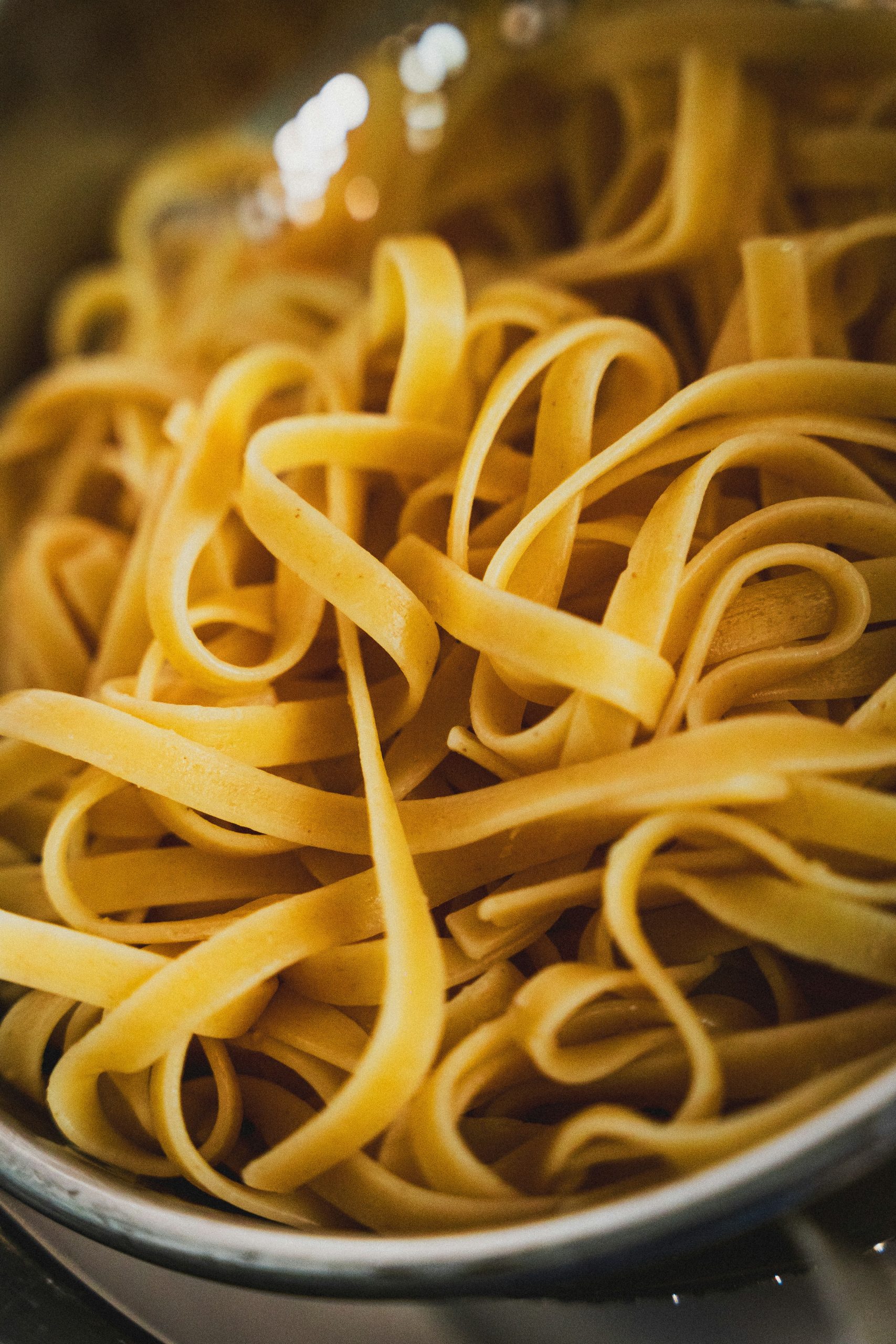
- Cut a 12 cm long and 8 cm broad sheet. take both the ends and bring them to the middle. again take the new ends and bring them to the middle, don't forget to dust flour after every fold. Cut 0.5cm strips, open its strands and voila your fettuccini pasta is ready.
- Make salted boiling water. Blanch the pasta for not more than 30 seconds. add it to your desired sauce.
If you tried this recipe do drop a comment. Also check out my experiments with sourdough by clicking here. Not forcing, just telling.


Really impressive!
Would definitely like to try
This is indeed a very easy recipe.
Will surely try
This recipe will make how much quantity of pasta?
this would yield a dough of 1500gms. It depends on what kind of pasta shape you are aiming for, it will approximately get you 30 to 35 raviolis. you can also freeze a part of dough and use it in the future.
Not a chef, neither do I even cook… But these articles are so fun to read. Never I would enjoy an article on cooking or that it would keep me hooked till the very end. Look forward to reading your next one 😋
great recipes
Great recipe and its good how there was an alternative for egg